After eleven years spent standing in bathroom showrooms from the Inner West to the Northern Beaches, I have heard the word "luxury" thrown around more times than I can count. Usually, it’s followed by a price tag that makes the average renovator want to sit down and have a long, hard think about their life choices. But let’s be honest: walking into a marble-clad room that feels like a cold, echoing mausoleum isn't luxury. It’s just expensive.
In my experience—and trust me, I’ve seen enough "dream bathrooms" that failed the test of a Tuesday morning rush—practical luxury is the absolute opposite of vanity. It’s about the psychology of calm. It’s about not having to struggle with your own house before you’ve even how to hide bathroom clutter had your first coffee. When we strip back the marketing jargon, "practical luxury" is simply design that serves your ritual rather than forcing you to serve it.
The Psychology of the Daily Ritual
We often talk about the bathroom as a functional space, but it’s actually the room where you bookend your day. It’s the site of your transition from sleep to "go-time" in the morning, and from stress to surrender in the evening. If your lighting is harsh, your mirror is perpetually fogged, and your controls are confusing, you are https://cleaneverycorner.com/how-to-bring-that-melbourne-hotel-vibe-home-a-no-nonsense-guide-to-bathroom-luxury/ starting your day with micro-frictions. These are small, but they add up.
Practical luxury is about eliminating these friction points. It is the joy of an anti-fog mirror that is clear the second you step out of the shower. It is the peace of mind that comes from intuitive bathroom controls that don't require an engineering degree to adjust the water flow. When you simplify the mechanics of the room, you free up mental space. That, to me, is the real luxury.
Small Changes That Change the Whole Room
I get frustrated when I see blogs or magazines telling readers to "just renovate" as if a full gut job is as simple as ordering a pizza. Renovations are messy, expensive, and stressful. My philosophy has always been to look for the "small changes that change the whole room." Even if your bones are dated, you can change the "vibe" through lighting and smart hardware choices.

Before you spend a cent, I always tell my clients to take a look at what they’re reading for inspiration. If you’re a local reader, you might spend time perusing the home sections of the Bendigo Advertiser. Navigating a Bendigo Advertiser subscription or login flow is often the first step in gathering your thoughts—it’s about getting into the mindset of what you actually need, not just what a glossy advertisement is selling you.
Here are three small changes that deliver high impact:
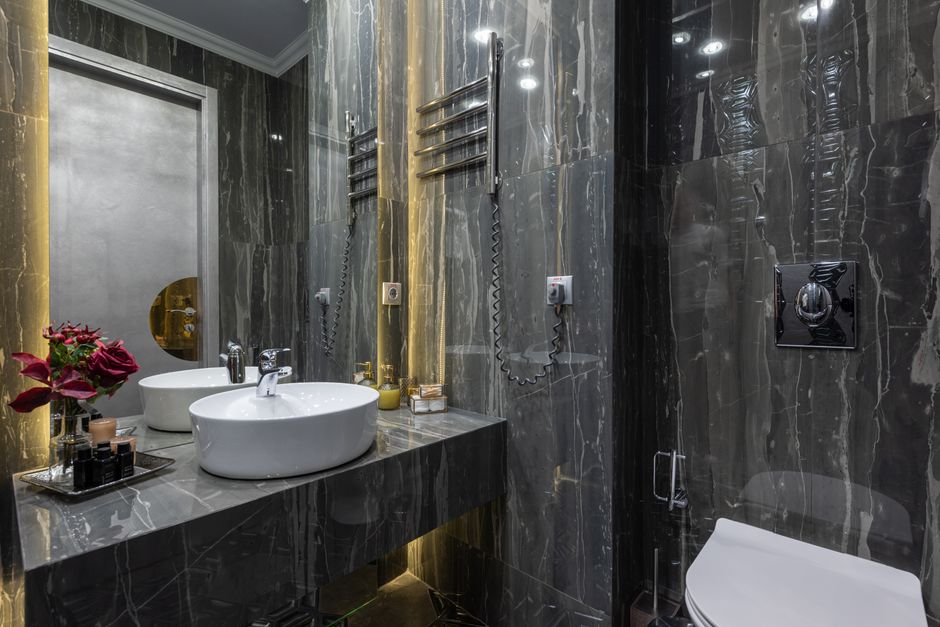
- Upgrade your lighting temperature: Stop using daylight-white bulbs everywhere. For the bathroom, you want 3000K (warm white) for relaxing and 4000K (cool white) for grooming. The mirror switch: Replacing a standard mirror with a high-quality integrated unit is often the single most significant upgrade you can make. Dimmer switches: Adding a dimmer to your main overhead lights is the cheapest way to feel like you're in a high-end spa rather than a surgical theatre.
The Lighting Hierarchy: A Consultant’s View
I have a rule: if you get the lighting wrong, the best tiles in the world won’t save the room. Lighting needs to be layered. You wouldn't wear a parka to the beach, so don't use 6000K office-style lighting in your sanctuary. You need to think in layers:
1. Ambient Lighting
This is your "general" light—the stuff that stops you from stubbing your toe. Aim for a soft, diffused glow. If you have an energy efficient LED strip hidden in a bulkhead or behind a mirror, you create a soft "wash" of light that feels expensive because it hides the source of the glare.
2. Task Lighting
This is for shaving, makeup, and contact lenses. This is where most people fail. They put a light directly above the mirror, which casts hideous shadows under the eyes and chin. The light should be at face level. Looking through the LED Mirror World website, you’ll notice that the best mirrors move the light to the perimeter of the glass. This is intentional; it illuminates the face evenly, which is both practical and flattering.
3. Accent Lighting
This is the "mood" layer. It’s the soft glow in a niche where you keep your candles or your favourite Aesop bottle. It’s entirely unnecessary for function, but essential for the soul.
Lighting Type Purpose Recommended Temp Ambient Overall visibility 3000K (Warm) Task Grooming/Precision 4000K (Neutral) Accent Relaxation/Mood 2700K - 3000KWhy Anti-Fog Tech isn't a Gimmick
I’ve walked into enough bathrooms where the owner is wiping the mirror with a towel, leaving streaks, only to find they’ve missed a spot of shaving cream or a stray eyebrow hair. It’s infuriating. An anti-fog mirror isn't just "tech for the sake of tech"—it’s a time-saver. By keeping the glass clear, you preserve the continuity of your morning flow.
When shopping for these, look for integrated heating pads behind the glass. They are often energy-efficient enough that they don't impact your bill significantly, but they transform the usability of the space. While I can’t give you specific prices—because let’s be honest, those change with supply chain fluctuations and I refuse to set you up for disappointment by guessing—I will say that investing in a quality mirror is one of the few instances where spending a bit more up-front pays dividends in daily convenience.
The Budget Reality Check
I am a realist. I know that most people have a budget. If you find yourself staring at an article—perhaps on a site like Shutterstock where you're looking at staged, beautiful rooms—remember that those rooms are designed to sell a fantasy. They aren't designed to survive the reality of a leaky tap or a wet floor.
If your budget is tight, don't try to fix everything at once. Focus on the intuitive bathroom controls. Changing your basin mixer to something with a longer handle or a more ergonomic design can make a surprising difference to your daily experience. It’s a physical change you notice every single time you turn the water on. Compare that to re-tiling, which is purely aesthetic and costs ten times as much.
Final Thoughts: Designing for YOU
Practical luxury is deeply personal. For some, it’s a heated towel rail that warms their robe on a frosty morning. For others, it’s a mirror that provides perfect, shadow-free lighting for their skincare routine. The most successful bathrooms I’ve consulted on aren't the ones with the most expensive marble; they’re the ones where the owner can turn off their brain, relax, and focus on themselves for ten minutes.
So, before you start looking at catalogue prices or dreaming of a total re-do, stop. Look at your bathroom. Where do you hesitate? What makes you groan? What takes you two steps when it should take one? Solve those problems first. That is where the real luxury lives.
And if you find yourself needing to do a bit of research, keep an eye on trusted sources. Whether you’re reading the local news on the Bendigo Advertiser or deep-diving into specific product specs on the LED Mirror World website, stay focused on what works for *your* lifestyle. Your bathroom is for you, not for a magazine cover. Keep it simple, keep it functional, and for heaven's sake, get the lighting temperature right.